


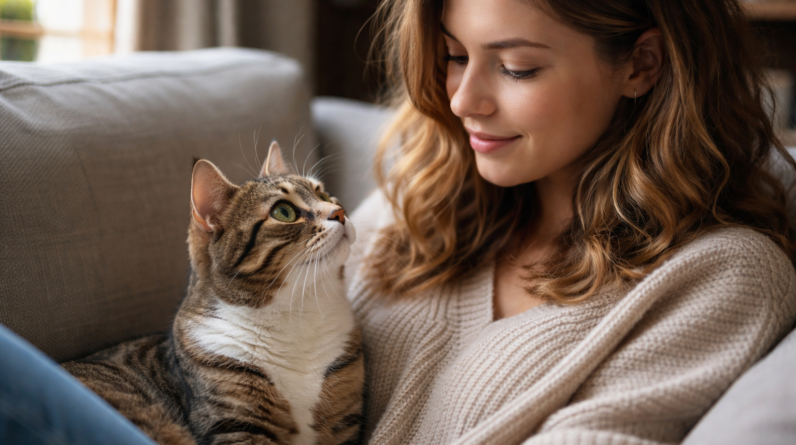
You’re relaxing on the couch when you feel it—that unmistakable, piercing sensation of being watched. You look up to find your cat’s unblinking eyes locked onto you from across the room. This intense cat staring can be endearing, amusing, or even slightly unsettling. What is going on behind those luminous eyes? Far from being a simple habit, a cat’s stare is a complex form of cat communication. Decoding the feline gaze requires understanding that when cats stare, they are speaking a silent language rich with meaning, from love and curiosity to instinct and request.
Understanding the Feline Gaze: It’s All About Communication
Cats are not small, furry humans. While we rely heavily on verbal cues, our feline companions operate in a world of subtle body language. Since they cannot speak our language, cat staring becomes a primary tool in their arsenal. To truly understand the reasons cat stares, you must look beyond just the eyes. The message in a stare is fully unlocked by reading the accompanying signals from the ears, tail, whiskers, and overall posture.
The Language of Love: Affectionate and Bonded Staring
Contrary to the belief that cats are aloof, their stares can be profound gestures of trust and affection. This is the heartwarming side of cat eye contact.
The Slow Blink: A “Cat Kiss”
This is perhaps the clearest sign of feline contentment and love. When your cat looks at you with relaxed, half-closed eyes and slowly closes them, they are giving you a “cat kiss.” It signals they feel safe and comfortable in your presence. You can actively strengthen your bond by reciprocating: catch their gaze, soften your own eyes, and slowly blink back. This shared slow blink is a powerful cat bonding ritual.
Contentment and Connection
A soft, relaxed stare with a gently twitching tail tip or a purring body curled nearby is simply your cat enjoying your company. They are “with” you. This prolonged, peaceful cat staring is a sign of deep trust, indicating they see you as a source of comfort and security.
The Asker: Staring to Communicate Needs and Desires
Sometimes, the feline gaze is less about love and more about logistics. Your cat has learned that staring at you is an effective way to get things done.
| Staring Context | Likely Message | Typical Accompanying Cues |
|---|---|---|
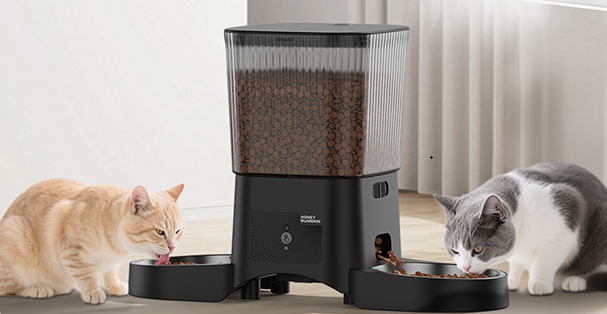
| By the food bowl or kitchen | “It’s dinner time!” (The Dinner Bell Effect) | Meowing, pacing, leading you to the kitchen |
| By a closed door or window | “I request access.” (The Doorway Consultant) | Pawing at the door, chirping |
| While you’re busy | “Play with me!” (The Playful Glare) | Crouched “ready to pounce” pose, twitching tail |
In these scenarios, your cat has made a direct association between their cat staring and a positive outcome—food, access, or fun. This intelligent use of cat eye contact is a clear form of cat communication.
The Observer: Curiosity and Engagement
Cats are innate information-gatherers. Often, when your cat stares at you from across the room, there is no urgent demand. You are simply the most interesting channel in their environment. They are studying your behavior, monitoring your activity, and staying engaged with their social companion. This type of cat staring stems from pure cat curiosity and the fact that they view you as a central member of their social colony.
The Hunter: Predatory Instinct and Focus
That fixed, laser-like predatory stare with a completely still body is a glimpse into your cat’s wild ancestry. The pupils may be dilated, and the body may be low to the ground. Importantly, they may not be staring at you, but past you—at a bird outside the window, a flickering shadow, or a dust mote in the sunlight. This intense focus is hardwired, a testament to their instinctual drive, even in the most pampered indoor cat.
The Worried Stare: Signs of Anxiety, Fear, or Illness
Not all cat staring is benign. A stare fueled by fear or anxiety has a different quality. The eyes will be wide with fully dilated pupils, even in light. The body language will be tense—ears flattened, body crouched or hunched, tail tucked. A cat that feels threatened may stare fixedly at the perceived threat. Furthermore, if your cat seems to be staring at a specific body part on themselves or on you excessively, or appears disoriented, it could indicate pain or a neurological issue. In these cases, consulting a veterinarian is crucial.
When Staring Becomes a Problem: Aggression and Challenge
In the feline world, direct, unblinking cat eye contact can be a challenge or a threat. This is most common in multi-cat households during territorial disputes. An aggressive, challenging stare is intense, with a very stiff body, pinned ears, and possibly a growl or hiss. It’s advised to never engage in a “staring contest” with an unfamiliar or agitated cat, as they will interpret your returned stare as an escalation. Instead, slowly avert your gaze and give them space.
How Should You Respond to Your Cat’s Stare?
Your response should be guided by context. Use this quick guide:
- For a Slow Blink: Reciprocate slowly to reinforce affection and trust.
- For a “Requesting” Stare: Assess the need (food, water, clean litter, play) before automatically fulfilling it to avoid reinforcing demand behavior.
- For an Observational Stare: Acknowledge them with a soft word or a slow blink, or simply let them observe. They’re just enjoying your presence.
- For a Fearful or Aggressive Stare: Do not stare back. Break the tension by slowly looking away and moving calmly. Give them space to decompress.
Frequently Asked Questions About Cat Staring
Is it bad to stare back at my cat?
It depends. With your own cat in a relaxed setting, gentle cat eye contact followed by a slow blink is positive. However, a direct, unblinking stare can be perceived as threatening or challenging, especially to an anxious cat or a cat you don’t know.
Why does my cat stare at me while I sleep?
This common behavior can be due to cat curiosity about your quiet state, a protective instinct (they are standing guard), or simple routine—you are a source of warmth and comfort, and they may be waiting for you to wake up and attend to them.
Why does my cat stare at me from across the room?
This is often classic observational behavior. They are comfortable with you and are simply monitoring your activity, waiting for a cue, or enjoying your presence from a distance. It’s a sign they feel connected to you.
Should I be worried if my cat stares at the wall?
Occasional, brief fixation is usually normal predatory stare behavior—they may hear a bug in the wall or see a light play. However, prolonged, frequent, or frantic staring at nothing visible can sometimes indicate health issues like hypertension or neurological problems, and a vet check is recommended.
Conclusion: Embracing the Silent Conversation
The next time you catch your cat staring at you, remember it is an invitation into their world. The reasons cat stares are varied—a request for dinner, a blink of pure love, a moment of primal instinct, or simple curiosity. By learning to decode the feline gaze and reading the full chorus of their cat body language, you move beyond being just an owner to becoming a true conversationalist in the subtle, silent, and profound language of cats. Their gaze is not a void; it’s a window into a rich emotional and instinctual life.