


Picture this: you’re on a peaceful hike when your dog yelps and starts limping, a small cut bleeding on their paw pad. Or, you’re at home and hear the scary sound of your dog gagging and choking. In these moments, panic is a natural first reaction—but preparation is what prevents it. Having a well-stocked dog first aid kit ready to go can make the critical difference between effective, immediate care and helpless scrambling. This guide isn’t about fear; it’s about empowerment. We’ll walk you through assembling a comprehensive, affordable DIY dog first aid kit for your home, car, and adventures. You’ll get a clear checklist, simple usage instructions, and the crucial knowledge of when to treat at home and when to seek immediate veterinary care.
Why Every Dog Owner Needs a First Aid Kit (It’s Not Paranoia)
A pet first aid kit is as fundamental as a leash or a food bowl. It’s not a sign of paranoia, but of responsible ownership. Most canine emergencies are minor: a cut paw, a torn nail from catching it on carpet, or a bee sting in the yard. With the right supplies, you can manage these situations calmly at home. However, in true major emergencies—like a deep wound or suspected poisoning—a kit allows you to provide critical first aid for dogs to stabilize your pet during the frantic trip to the vet. It’s a tangible source of peace of mind, knowing you’re prepared to act as your dog’s first responder.
Your Complete DIY First Aid Kit Checklist
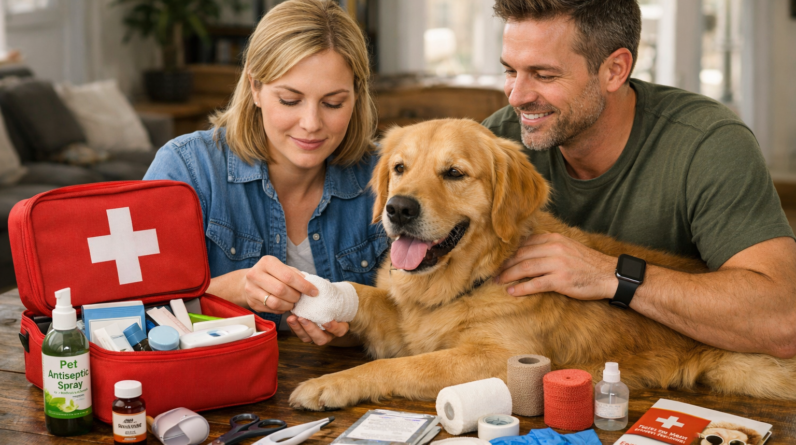
Here is your actionable, category-by-category checklist for the ultimate dog emergency kit. Organizing it this way makes it easy to pack and find items under stress.
Wound Care & Cleaning Essentials
This is your core module for handling injuries.
-
Sterile Saline Solution: For safely flushing debris from eyes or wounds.
-
Antiseptic Wash or Wipes: Chlorhexidine or povidone-iodine (Betadine) are excellent, vet-recommended choices for cleaning cuts.
-
Pet-Safe Antibiotic Ointment: Helps prevent infection in minor scrapes.
-
Self-Adhering Bandage Rolls (Vet Wrap): This is crucial—it sticks to itself, not fur. Essential for holding dressings in place.
-
Non-Stick Gauze Pads: To cover wounds before wrapping.
-
Adhesive Tape: For securing bandage ends.
-
Blunt-Tipped Scissors: For cutting bandages and tape without risking a poke.
-
Tweezers: For removing splinters or debris.
Tools & Safety Items
These protect you and help you assess the situation.
-
Digital Thermometer (Pet-Specific): Know how to take your dog’s temperature rectally. Normal is between 101°F and 102.5°F.
-
Disposable Gloves: For hygiene and your protection.
-
Muzzle: A soft basket muzzle is vital. Even the gentlest dog may bite when scared and in pain.
-
Flashlight/Penlight: For checking eyes, mouths, or wounds in low light.
-
Emergency Blanket: To treat for shock or keep a dog warm.
-
Towel: Useful for restraint, cushioning, or as a makeshift stretcher.
Medications & Supplements (With a BIG Warning)
⚠️ CRUCIAL WARNING: Never administer human medications without explicit, dose-specific instruction from your veterinarian or animal poison control.
-
3% Hydrogen Peroxide: Used only to induce vomiting if specifically directed by a vet or poison control. The dosage is weight-specific and incorrect use can be harmful.
-
Benadryl (Diphenhydramine): Can be used for allergic reactions (like bee stings) but only at the correct dosage approved by your vet.
-
Styptic Powder or Cornstarch: The fastest way to stop dog nail bleeding from a torn quick.
Important Documents & Extras
-
Your Vet’s & Emergency Clinic’s Phone Numbers: Saved in your phone and printed.
-
Animal Poison Control Hotline: (888) 426-4435 (Note: a fee may apply). Have this ready for any dog poisoning emergency.
-
Copies of Medical Records: Vaccination history, especially rabies.
-
Recent Photo of Your Dog: Vital for identification if they get lost during a chaotic event.
-
A Durable Container: A tackle box, toiletry bag, or small plastic bin to keep everything organized and portable.
How to Use Your Kit: Handling Common Canine Emergencies
Cuts & Scrapes
- Muzzle your dog if there’s any risk of biting.
- Apply gentle pressure with a non-stick gauze pad to control bleeding.
- Gently clean the wound with saline or antiseptic wash.
- Apply a thin layer of pet-safe antibiotic ointment.
- Cover with a gauze pad and secure with self-adhering bandage (vet wrap)—snug but not tight.
Torn Nail
- Stay calm. It looks bloody but is rarely life-threatening.
- Restrain your dog gently, often by wrapping them in a towel.
- Apply styptic powder or cornstarch directly to the bleeding nail and hold firm pressure for 3-5 minutes.
- If bleeding persists, you can bandage the foot with a pad and vet wrap.
Bee Stings & Insect Bites
- Locate the stinger and scrape it out with a credit card or remove with tweezers.
- Apply a cold compress to the area to reduce swelling.
- Watch closely for signs of a severe allergic reaction: facial swelling, hives, difficulty breathing. This requires immediate vet care.
- If your vet has pre-approved Benadryl for your dog’s weight, administer it.
When to Use the Kit vs. When to Go Straight to the Vet: The Red Flags
Your dog first aid kit is for stabilization and minor care. These are signs of emergency in dogs that demand you skip home treatment and go straight to professional care:
-
Difficulty breathing, choking, or pale/blue gums
-
Profuse bleeding that doesn’t stop with direct pressure after 5-10 minutes
-
Suspected poisoning (from chocolate, xylitol, rat bait, etc.)
-
Broken bones or inability to bear weight on a limb
-
Loss of consciousness, seizures, or sudden collapse
-
Bloated, distended, or painfully hard abdomen
-
Severe burns, trauma from a car accident, or heatstroke
When in doubt, call your vet or emergency clinic immediately.
Maintaining Your Kit & Practicing Preparedness
Check your kit every six months. Replace expired products, restock used items, and ensure batteries in the flashlight work. Practice preparedness: get your dog comfortable with you handling their paws and mouth. Practice putting the muzzle on for treats when they are calm. Store your main kit in an easily accessible place at home, and create smaller, streamlined versions for your car first aid kit and dog hiking safety kit.
FAQ: Your Dog First Aid Questions, Answered
What’s the most important item in the kit?
Your vet’s phone number and the Animal Poison Control Hotline (888-426-4435). Information and professional guidance are more critical than any supply.
Can I use a human first aid kit for my dog?
You can use some basics (gauze, tape, scissors), but a human kit lacks pet-specific items like a muzzle, vet wrap, and guidelines for species-safe medication dosages.
How do I safely induce vomiting if my dog eats poison?
Only do this if explicitly instructed by a vet or poison control. They will tell you if it’s appropriate and provide the correct weight-based dosage of 3% hydrogen peroxide. Never induce vomiting for caustic substances or petroleum products.
What should I do if my dog won’t let me help them?
Your safety is paramount. Use a basket muzzle. An injured, scared dog may bite instinctively, even their favorite person. Muzzling allows you to help them safely.
Where should I store the kit?
Somewhere easy to grab in a crisis—a closet by the front door, a shelf in the laundry room. Not buried in the basement or garage. Keep a mini-kit in your car’s glove compartment or trunk.
Conclusion: Your Preparedness Brings Peace of Mind
Assembling a DIY pet first aid kit is a simple, impactful project you can complete in an afternoon. It transforms you from a potentially panicked owner into a capable first responder. This preparedness is one of the greatest gifts you can give your dog—a tangible expression of your care that turns fear into confident action.
Call to Action: Print this checklist and build your kit this weekend. Once it’s done, share a photo of your completed kit in the comments to inspire other pet parents! For more vital safety knowledge, read our guides on How to Perform Canine CPR and Common Household Poisons for Dogs.