


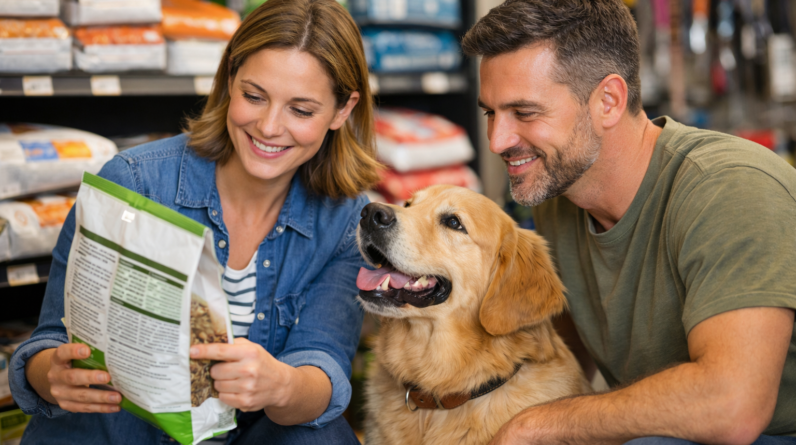
Standing in the pet food aisle, staring at a wall of bags adorned with words like “premium,” “natural,” and “wholesome,” can be overwhelming. You want to provide the absolute best dog food for your furry friend, but the dog food label looks like a confusing legal document. Which ingredients matter? What do all those percentages mean? You’re not alone in this frustration. This guide is here to transform that confusion into confidence. We’ll cut through the marketing fluff and give you the practical tools to decode any label, turning you from a puzzled shopper into an informed pet parent. Let’s demystify the key sections together: the ingredients list, the guaranteed analysis, and the all-important AAFCO statement.
Why the Label Matters: It’s a Regulated Document, Not an Ad
First things first: that bag or can is governed by law. The U.S. Food and Drug Administration (FDA) and the Association of American Feed Control Officials (AAFCO) set strict rules for what must be on a dog food label. Understanding this label is your only way to see past the glossy marketing. Terms like “premium,” “holistic,” or “human-grade” have no standard legal definition in pet food. They are simply branding. Your power as a consumer lies in the standardized, regulated parts of the label. By learning to read them, you make choices directly linked to your dog’s vitality—supporting optimal energy, a shiny coat, a healthy weight, and long-term wellbeing.
The Ingredient List Decoded: Order, Quality, and Myths
This is where most eyes go first, and it’s often misunderstood. Let’s break it down.
The Rule of Descending Weight
Ingredients are listed in order of pre-cooked weight. This means the first ingredient weighed the most before processing. However, moisture content plays a huge role. Fresh chicken is about 70% water. After cooking, it loses much of that weight. Chicken meal—which is chicken with water and fat removed—is a concentrated protein source. A food listing “chicken” first may have less actual protein by weight after cooking than one listing “chicken meal” second or third.
Identifying Protein Sources
-
Whole Meats (e.g., Chicken, Beef): Good quality, but remember the water weight factor.
-
Meals (e.g., Chicken Meal, Salmon Meal): These are not fillers. They are concentrated, dry protein powders. A named meal (like “chicken meal”) is a high-quality source of dense protein and amino acids.
-
By-Products: This is the most controversial term. AAFCO defines by-products as non-rendered, clean parts other than meat (e.g., organs, bone, blood). Named by-products (chicken by-products or chicken liver) can be highly nutritious. Generic “meat by-products” are less desirable.
Carbohydrates and Fillers
Dogs need carbs for energy. The debate is about source and amount.
-
Whole Grains: Like brown rice, oats, and barley, these provide energy, fiber, and essential nutrients. They are not inherently “bad” for most dogs.
-
Grain-Free Carbs: Potatoes, lentils, peas, and chickpeas are common in grain-free dog food. It’s crucial to note that these are still carbohydrates, not pure protein.
The “Split Ingredient” Tactic
Be aware of splitting. A manufacturer might list “ground corn,” “corn gluten meal,” and “corn bran” separately. Individually, they might appear lower on the list, but if combined, “corn” could be the first ingredient. This tactic can disguise the true volume of a less-expensive component.
The Guaranteed Analysis: Understanding the Numbers
This chart shows the minimum or maximum levels of key nutrients.
Key Components
-
Crude Protein: “Crude” refers to the measurement method, not quality. This is a minimum percentage.
-
Crude Fat: Also a minimum. Essential for energy and coat health.
-
Crude Fiber: A maximum. Important for digestive health.
-
Moisture: A maximum. Canned food can be 78%+ moisture, while dry food is typically 10%.
How to Compare Foods: The Dry Matter Basis
You cannot directly compare the percentages between wet and dry food due to moisture difference. To compare fairly, convert to a dry matter basis:
- Find the moisture % and subtract from 100%. This is the dry matter (DM).
- Divide the nutrient % (e.g., protein) by the DM %.
- Multiply by 100.
Example: Dry Food (10% moisture, 24% protein): DM = 90%. Protein (DM) = (24/90) x 100 = 26.7%.
Wet Food (78% moisture, 8% protein): DM = 22%. Protein (DM) = (8/22) x 100 = 36.4%.
Suddenly, that wet food is much richer in protein by dry weight!
The Nutritional Adequacy Statement (The AAFCO Statement): The Most Important Line
This is the #1 thing to find on any bag or can. It tells you if the food is nutritionally complete.
Location & Wording
Look for a phrase like: “Animal feeding tests using AAFCO procedures substantiate that [Brand] provides complete and balanced nutrition for [Life Stage].” This is the gold standard, meaning the food was proven in real-feeding trials.
Alternatively: “[Brand] is formulated to meet the nutritional levels established by the AAFCO Dog Food Nutrient Profiles…” This means it was designed in a lab to meet standards but not necessarily fed in a long-term trial.
Life Stage Significance
This part confirms the food is appropriate for your dog’s life stage: growth (puppy), adult maintenance, all life stages, or senior. Feeding a puppy an adult maintenance food, for example, can deprive them of crucial nutrients for development.
Decoding Marketing Terms & “Buzzwords”
-
“Natural”: According to AAFCO, this means a feed or ingredient derived solely from plant, animal, or mined sources, without synthetic processing. It says nothing about overall quality.
-
“Organic”: Must meet USDA National Organic Program standards (like human food). Look for the official seal.
-
“Grain-Free” / “Gluten-Free”: Necessary for the small number of dogs with genuine allergies. For most, it’s a dietary choice, not a guarantee of higher quality.
-
“Human-Grade”: Implies all ingredients and the finished product are edible per human standards. Extremely difficult to verify and no official AAFCO definition exists.
-
“No Artificial Preservatives”: Often preserved with natural alternatives like mixed tocopherols (Vitamin E), rosemary, or citric acid.
Special Considerations: Allergies, Weight, and Life Stages
Food Allergies
Common culprits are beef, dairy, chicken, wheat, egg, and soy. If you suspect an allergy, the ingredients list is your detective tool. Look for a “limited ingredient diet” with a novel protein (e.g., duck, salmon) and single carbohydrate source.
Weight Management
Look for a weight management dog food with an AAFCO statement for adult maintenance. Key indicators in the guaranteed analysis are lower crude fat percentages and higher crude fiber to promote satiety, all with controlled calories.
Puppy vs. Senior
-
Puppy Food: Should have an AAFCO statement for “growth” or “all life stages.” Look for higher crude protein and fat, plus DHA for brain development.
-
Senior Dog Food: Often has moderate protein, controlled calories, and may include joint supplements like glucosamine. There’s no official AAFCO senior standard, so focus on your individual dog’s needs.
Putting It All Together: Your 5-Step Label Checklist
- Check the AAFCO Statement. Is it “complete and balanced” for your dog’s correct life stage?
- Review the First 5 Ingredients. These make up the bulk of the food. Are they high-quality, recognizable items?
- Examine the Guaranteed Analysis. Use the dry matter basis calculation if comparing wet to dry food for key nutrients.
- Find a Named Manufacturer. Look for a phone number or website. Reputable companies are transparent.
- Ignore the Flashy Front. Make your decision based on the standardized, regulated information on the side or back panel.
Conclusion: Empowerment Through Knowledge
Choosing high quality dog food is one of the most impactful things you do for your dog’s health. By learning the language of labels, you move from relying on marketing claims to making evidence-based decisions. This knowledge empowers you to cut through the noise and select a diet that truly supports your dog’s unique vitality. Remember, the “perfect” food isn’t the most expensive or trendiest—it’s the one that meets your individual dog’s nutritional needs.
Call to Action: Grab the bag or can of your dog’s current food and run it through the 5-step checklist above. What did you discover? Share the most surprising thing you learned in the comments! For deeper dives, explore our related articles on Grain-Free vs. Grain-Inclusive Diets: The Real Story and Top 5 Ingredients for a Healthy Dog Coat.
FAQ: Your Dog Food Label Questions, Answered
What does “by-product” really mean?
As defined by AAFCO, named by-products (e.g., “chicken by-products”) are the clean, non-rendered parts of the animal other than the muscle meat. This can include highly nutritious organs like liver, which are rich in vitamins. The concern arises with generic “meat by-products,” where the source is unknown.
Is a food with corn always bad?
Not necessarily. Whole corn or corn meal provides digestible carbohydrates, protein, and essential fatty acids. The issue for some is when corn is used as a primary, low-cost filler in large amounts. Look at its placement in the ingredient list and the overall quality of other ingredients.
How important is the first ingredient?
It’s important, as it’s the heaviest component before processing. However, you must consider it in context with the next several ingredients and understand the difference between whole meats and meals. A list starting with “chicken” followed by three low-quality carbs may be less ideal than one starting with “salmon meal” and “dehydrated chicken.”
What’s the difference between ‘complete and balanced’ and ‘for intermittent feeding’?
“Complete and balanced” meets AAFCO nutrient profiles for sustained daily feeding. “For intermittent or supplemental feeding” means it is not nutritionally complete and should not be your dog’s sole diet. This is common for some canned toppers or treat products.
Should I be worried about recalls, and how does the label help?
Recalls happen. A label with a named manufacturer (not just a distributor like “For Big Box Pet Store”) and a lot code allows for precise tracking and communication if a recall occurs. This information is vital for your dog’s safety.