


What Is This Thing, Anyway?
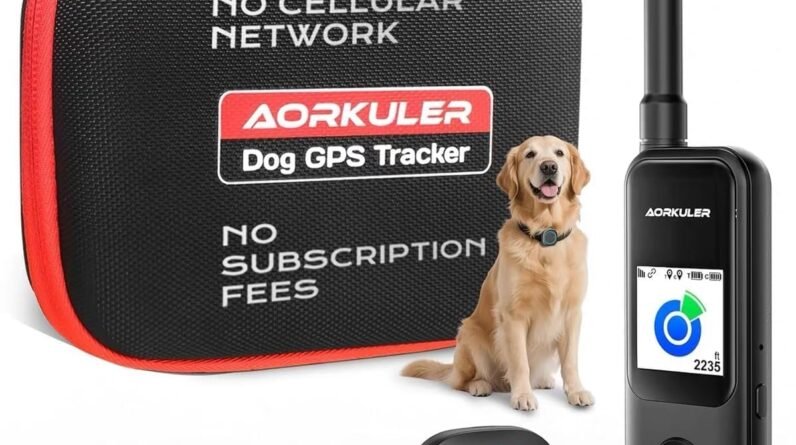
Let me start by saying, if you’ve ever felt that heart-dropping panic when your dog vanishes behind a tree line, this review is for you. I’m talking about the Aorkuler Outdoor GPS Dog Tracker, specifically the “Tracker 2” model. In a nutshell, it’s a handheld controller and a small collar device that lets you track your dog’s location in real-time, completely without cell service or a monthly subscription. Its main purpose is to give you eyes on your adventurous pup when you’re hiking, camping, or on a remote farm. The key sell for me? It uses direct GPS and a proprietary radio signal, so it works where your phone doesn’t.
Design & Build Quality: Tough Enough for the Trail?
First Impressions & Feel
Right out of the box, the Aorkuler feels surprisingly solid. The tracker itself is a small, lightweight pod that clips securely to a collar. At just over 1 ounce, my dog didn’t even seem to notice it was there. The handheld controller is about the size of a small smartphone but thicker, with a clear screen and a few buttons. It fits comfortably in a pocket or clips to a belt loop.
Durability & Waterproofing
This thing is built for the outdoors. Both the tracker and the controller are rated as waterproof (IP67, I believe), which means rain, puddles, and even a surprise swim shouldn’t faze it. The plastic casing feels rugged, not cheap. The included zippered case is a nice touch for storage, and the magnetic charging cables are super convenient—no fiddly ports to get clogged with dirt.
Key Features & How You Actually Use Them
Real-Time, No-Subscription Tracking
This is the big one. The system works by having both the handheld unit and the collar tag get a GPS lock from satellites. Then, the tag sends its location data directly to the handheld via a long-range radio signal (like a super walkie-talkie). The screen shows a simple green arrow pointing to your dog and a distance in feet/meters. No apps, no maps to download, no $10/month fee. It updates every few seconds, so you’re getting near-live info.
Battery Life: The Good and The Realistic
The specs claim up to 24 hours of continuous use or over 10 days for intermittent walks. From my use and the reviews, this is pretty accurate. If you’re on a full-day hike, charge both units the night before and you’re golden. For daily 1-hour walks, you can easily go a week between charges. The controller battery depletes faster if you leave the screen on constantly.
The “Find Me” Features: Sound & Light
The collar tag has a built-in speaker for a tone and an LED light. From the controller, you can trigger a beep to call your dog or flash the light to spot them in the dark. It’s a brilliant, simple idea. Heads up though: Several users note the beeper isn’t super loud. It’s great for a dog that’s already trained to recall to a sound, but if your dog is far off or in thick brush, it might be more of a visual “blinky light” aid for you than an audio cue for them.
How It Stacks Up Against the Competition
Let’s be real, the main competitors are cellular trackers like Tractive or Whistle. Those use your phone’s network, so they can work anywhere with service and often have fancy “virtual fence” features. But in true wilderness? They’re a brick. They also come with a mandatory monthly fee.
The Aorkuler sits in its own niche. It’s more like a dedicated, offline rangefinder. It won’t show your dog’s location on a map on your phone, and its range is limited to about 3.5 miles in open space (which is still massive). But for the use case it’s designed for—remote areas—it’s in a league of its own. Other radio-frequency trackers exist, but Aorkuler’s combination of price, no-fee model, and GPS accuracy is tough to beat.
The Honest Pros & Cons
Pros:
-
Zero Subscription Fees: This is huge. One-time purchase.
-
Works Truly Off-Grid: Perfect for backpacking, hunting, or remote cabins.
-
Simple & Intuitive: My tech-averse partner figured it out in minutes. No app frustration.
-
Great Battery Life: For its purpose, it lasts plenty long.
-
Accurate Distance & Direction: In open to semi-wooded areas, it’s spot-on.
Cons:
-
No Proactive Alerts: The biggest flaw, as noted by many. It won’t beep at you if your dog wanders out of a set range. You have to watch the screen.
-
Quiet Beeper: The audible cue on the collar isn’t as loud as some would like.
-
Signal Limitations: Like all GPS, heavy canopy, caves, or canyons can weaken or block the signal. It needs a clearish sky.
-
Durability Concerns: While most praise it, a few isolated reviews mention units failing.
Why I Think It’s Better (For the Right Person)
It’s better than cellular trackers if your main worry is wilderness escapes. It’s better than simple Bluetooth trackers (like Tile) because of its massive range. Its killer advantage is the marriage of satellite GPS with a direct radio link, freeing you from the twin shackles of cell towers and monthly bills. For a specific user—the avid hiker, camper, or rural property owner—this is a more reliable tool.
What Other Users Are Saying (The Real Tea)
Scouring the reviews, a very clear pattern emerges. The vast majority of users are thrilled. They love the simplicity, the freedom from subscriptions, and the peace of mind it provides in the woods. One user even mentioned it found their dog when their fancy “Fi” cellular collar failed in dense forest.
The critical feedback consistently points to three things:
-
The wish for a “boundary alert” on the handheld.
-
The relatively quiet beeper.
-
Rare mentions of calibration issues or unit failure (though many note excellent customer service in resolving these).
The praise for battery life, accuracy, and no-fee structure is nearly universal.
Tips & Tricks to Get the Most Out of It
-
1.Calibrate & Wait: Always let the tracker and controller get a solid GPS lock before you attach it to your dog and start your adventure. This means turning them on and letting them sit for a minute or two. This is the #1 tip for accuracy.
-
2.Charge with a Proper Adapter: Use a quality USB wall adapter, not a low-power port on a computer, for a full, quick charge.
-
3.Use the Light at Dusk: The LED is more useful than you think for spotting a moving dog in low light.
-
3.Mind the Range: Remember the 3.5-mile range is “open area.” Thick forest will reduce it. Start learning how your local terrain affects it.
-
4.Secure the Clip: Make sure it’s firmly attached to a well-fitting collar or harness. The Ruffwear harness is a popular combo, as one reviewer noted.
Frequently Asked Questions (FAQ)
Q: Do I need a phone or internet for this to work?
A: Nope! That’s the whole point. It works entirely between the two devices and GPS satellites.
Q: What’s the real-world range?
A: In open fields, up to 3.5 miles. In light woods, expect 1-2 miles. In very dense forest, it will be less, but still vastly superior to Bluetooth.
Q: Is it truly waterproof?
A: Yes, it’s rated for submersion. Your dog can jump in a lake and it’ll be fine.
Q: How do I charge it?
A: It comes with two magnetic charging cables. Just snap them onto the backs of the devices.
Q: Can I track multiple dogs?
A: You’d need one complete system (one handheld + one tracker) per dog. The handheld pairs to a single tracker.
Final Verdict & Who Should Buy It
So, after all that, would I recommend the Aorkuler GPS Tracker? Absolutely, but with a clear audience in mind.
If you are: an outdoor enthusiast who hikes, camps, hunts, or lives on rural property with a dog that loves to explore beyond cell service… this is a no-brainer purchase. The peace of mind is worth every penny. The lack of a subscription is the cherry on top.
If you primarily: want to track your dog around your suburban neighborhood or get alerts if they leave your yard, a cellular tracker with geo-fencing might be more suitable.
The drawbacks—mainly the lack of a range alert and the quiet beeper—are real but manageable for its intended use. You just have to be a slightly more active participant, glancing at the controller now and then.
For me, and for thousands of other users, the Aorkuler Tracker 2 is a brilliantly simple solution to a very specific, anxiety-inducing problem. It’s not trying to do everything. It’s trying to do one critical thing perfectly: show you where your dog is when the modern world’s infrastructure can’t help you. And at that job, it excels.