


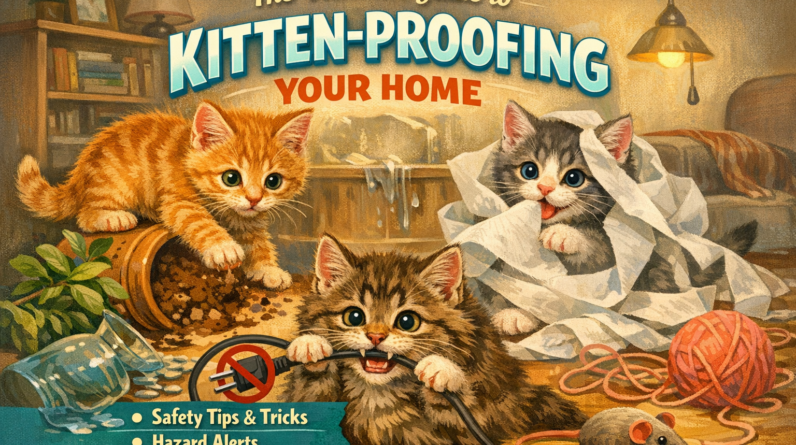
Meta Description: Bringing home a new kitten? Our complete kitten-proofing guide covers electrical cord safety, toxic plants, small spaces, and more to create a safe haven for your curious feline friend. Essential reading for any first-time kitten owner.
Introduction: Why Kitten-Proofing is Non-Negotiable
Bringing a playful, energetic kitten home is a joyous occasion. However, their boundless curiosity and innate drive to explore can quickly lead them into danger. Kitten-proofing your home is not an optional step—it’s a critical act of responsibility, much like baby-proofing for a human infant. A kitten sees your home as a giant jungle gym filled with intriguing toys and hiding spots, many of which can pose serious dangers for kittens.
The goal of this kitten care guide is to help you proactively identify and neutralize these hazards before they become emergencies. By transforming your space into a kitten safe home, you provide a secure foundation for exploration, learning, and bonding. This guide will walk you through a comprehensive room-by-room kitten safety inspection, providing you with a practical kitten-proofing checklist for peace of mind.
Understanding Your Kitten’s World: Curiosity and Claws
To effectively proof your home, you must see it from a kitten’s perspective. They explore the world by climbing curtains, scratching furniture, chewing on interesting textures, and squeezing into impossibly small spaces. Common household items like a dangling blind cord, a wobbling bookshelf, or an attractive houseplant become major kitten hazards. Remember, even with thorough kitten proofing tips applied, constant supervision is key, especially in the first few weeks.
Room-by-Room Kitten Safety Inspection
A systematic approach is the best way to ensure you don’t miss any hidden dangers for kittens. Get on your hands and knees and scan each room at their level.
The Living Room & Common Areas
This high-traffic zone is full of potential adventures and risks.
-
Window Dangers: Secure blind and curtain cords with cord wraps or wind-ups to prevent strangulation.
-
Falling Objects: Anchor unstable furniture, TVs, and bookshelves to the wall. A climbing kitten can easily topple a tall, unsecured unit.
-
Toxic Decor: Remove or place completely out of reach any toxic plants for cats (see checklist below).
-
Heat Sources: Use a safety gate or screen to block access to fireplaces and wood stoves, even when not in use.
-
Small Objects: Stow away ingestible items like rubber bands, pins, batteries, and small children’s toys.
The Kitchen & Dining Area
The kitchen is a hotspot for dangers, from chemicals to appliances.
-
Appliance Alert: Always check the dishwasher, washing machine, and dryer before closing and starting them. Kittens seek warm, dark places to sleep.
-
Chemical Storage: Use childproof latches to secure cabinet doors containing cleaners, chemicals, and garbage bags.
-
Trash Troubles: Invest in a trash can with a secure, locking lid to prevent scavenging of harmful food scraps or packaging.
-
Food Hazards: Keep countertops clear of foods toxic to cats, such as onions, garlic, chocolate, grapes, and anything containing xylitol (a common sweetener).
-
Burner Safety: Discourage stovetop exploration by using burner covers when the cooktop is not in use.
The Bathroom & Laundry Room
These utility rooms concentrate multiple risks in a small space.
-
Water Risks: Keep toilet lids firmly closed to prevent drowning or drinking of cleaning chemicals.
-
Medicine Cabinet: Securely store all medications, vitamins, supplements, and cosmetics.
-
Cleaning Supplies: Ensure all cleaning products, laundry pods, and detergents are in locked cabinets.
-
Hot Tools: Unplug and store hair dryers, straighteners, and curlers immediately after use. Their cords are tempting, and their surfaces stay hot.
The Bedroom & Home Office
Our personal spaces are often filled with enticing but hazardous items.
-
Electrical Cord Safety: Manage electrical cords and cables using cord concealers, cable management boxes, or bitter-tasting deterrent sprays to prevent chewing and electrocution.
-
Craft & Hobby Supplies: Keep sewing kits, knitting baskets (especially with yarn), and gift-wrapping supplies locked away.
-
Choking Hazards: Be diligent about picking up hair ties, jewelry, dental floss, and paperclips—all common causes of intestinal blockage.
-
Tech Zones: Create safe zones around computers and electronics to prevent cord chewing and knocking over expensive equipment.
High-Priority Hazard Zones: Special Attention Required
Certain dangers are so common and severe they deserve their own focused section in your kitten-proofing checklist.
Electrical & Cord Safety
Chewing on a live wire can be fatal. Electrical cord safety for cats is paramount.
-
Use PVC cord covers, split loom tubing, or adhesive cord clips to bundle and hide wires.
-
Unplug non-essential appliances when not in use.
-
Apply bitter apple spray or a commercial pet deterrent to cords as an added training measure.
Toxic Substances Checklist
Prevention is the only cure for poisoning. Know what’s toxic and remove or secure it.
| Category | Common Examples (Not a Full List) |
|---|---|
| Toxic Plants for Cats | Lilies (highly fatal), Sago Palm, Pothos/Devil’s Ivy, Dieffenbachia, Philodendron, Oleander, Azalea/Rhododendron. |
| Human Foods Poisonous to Cats | Onions, Garlic, Chives, Chocolate, Xylitol, Alcohol, Caffeine, Grapes & Raisins, Raw Yeast Dough. |
| Household Chemicals & Other | Antifreeze, Rodenticides, Insecticides, Bleach, Essential Oils (esp. tea tree, citrus, pine), Human NSAIDs (ibuprofen, acetaminophen). |
Small Spaces & Hideaways
A kitten’s ability to vanish is legendary. Block access to:
-
The gaps behind and under large appliances (refrigerators, ovens, entertainment centers).
-
Open vents or holes in cabinetry.
-
The mechanisms of reclining chairs, sofa beds, and fold-out beds. Always check before operating.
Strings, Threads, and Linear Objects
This is a critical and often underestimated danger. If ingested, string, yarn, dental floss, or ribbon can cause a “linear foreign body,” where the intestines bunch and tear. Always store these items securely and supervise play with wand toys, putting them away after use.
Essential Safe Zones: What to Provide Instead
Effective kitten-proofing isn’t just about removing dangers; it’s about providing appropriate, safe alternatives.
Designated Safe Climbing & Scratching Areas
-
Provide stable, tall cat trees and scratching posts near furniture they might otherwise target.
-
Install cat shelves and window perches to satisfy their urge to climb and survey their kingdom.
Safe Toy Guidelines
-
Choose toys that are too large to swallow and lack small, detachable parts (like googly eyes).
-
Engage in daily interactive play with wand toys to burn energy, then store them safely.
-
Rotate a variety of sturdy plush toys, kicker toys, and puzzle balls to keep them stimulated.
Creating a “Kitten Base Camp”
One of the best kitten proofing tips is to start small. A kitten base camp is a single, thoroughly proofed room (like a bedroom or bathroom) equipped with food, water, litter, a bed, and toys. This allows your new family member to acclimate without being overwhelmed, letting you introduce them to the rest of your cat-proofed home gradually over several days.
Ongoing Vigilance & Maintenance
Kitten-proofing is not a one-time task. As your kitten grows, they will develop new abilities and discover new “toys.” Regularly get down to their level to spot emerging hazards. Use positive reinforcement to redirect them from off-limit areas to their approved climbing posts and toys.
Conclusion: Peace of Mind for a Happy Life Together
Thorough kitten-proofing your home is the ultimate act of care for your new companion. By shifting your mindset from reactive scolding to proactive protection, you create an environment where your kitten’s curiosity can flourish safely. This kitten safety process reduces your stress, prevents costly emergencies, and most importantly, builds the foundation for a long, healthy, and joyful life together. Welcome to the rewarding journey of first-time kitten ownership—now you’re ready to enjoy those playful years with confidence and security.