


Introduction: The Feline Dental Dilemma
You’ve got the kitty toothbrush, the special toothpaste, and the best intentions. But the moment you try to lift your cat’s lip, it turns into a whirlwind of claws, hisses, and a rapidly disappearing feline. If this sounds familiar, you’re not alone. For many pet parents, the thought of cat teeth cleaning at home feels like an impossible mission.
But here’s the uncomfortable truth: ignoring feline dental health has serious consequences. By the age of three, most cats have some degree of dental disease, which can lead to pain, infection, and even damage to their heart and kidneys. The good news? With the right strategy, you can learn how to brush cat teeth effectively and peacefully. This guide is designed to transform a potential war zone into a calm, positive routine for both of you.
Why Your Cat’s Teeth Need Attention (The “Why” Before the “How”)
Before we dive into technique, it’s crucial to understand what’s at stake. Cat dental care isn’t just about fresh breath; it’s about preventing silent suffering.
The most common issue is periodontal disease in cats, which starts when plaque hardens into tartar under the gumline, causing inflammation, infection, and eventual tooth loss. Another painful condition is tooth resorption, where a cat’s teeth literally dissolve.
The consequences of neglect go far beyond the mouth. Bacteria from dental infections can enter the bloodstream, putting strain on vital organs. This makes consistent cat oral hygiene a key part of preventive healthcare.
Many owners rely on dental treats and food alone, but veterinarians compare this to eating a crunchy cookie instead of brushing your own teeth. They can help, but they are no substitute for mechanical cleaning. The best way to brush cat teeth is, well, to actually brush them.
Gathering Your Purr-suasion Toolkit: Supplies
Having the right tools is half the battle. Never use human toothpaste, as it contains fluoride and xylitol, which are toxic to cats.
| Essential Item | Why It Matters | Recommended Type |
|---|---|---|
| Cat Toothpaste | Enzymatic formulas help break down plaque. Must be palatable. | Poultry or fish-flavored, veterinary-approved. |
| Toothbrush | Must fit a cat’s small mouth and sensitive gums. | Finger brush for cats, small pet toothbrush, or soft pediatric brush. |
| High-Value Reward | Creates a positive association, making brushing cat teeth easier. | Meat paste, puree, or a special wet food they love. |
The Pre-Brush Campaign: Laying the Groundwork
Rushing is your biggest enemy. This phase is about building positive associations, not cleaning.
Step 1: Touch Desensitization
For a week, spend a minute each day gently massaging your cat’s cheeks and gums with your finger. Pair this with praise and a treat. The goal is to make mouth handling no big deal.
Step 2: Introduce the Cat Toothpaste
Let your cat investigate and lick the cat toothpaste off your finger. This isn’t a trick—it’s a tasty treat! Do this for several days.
Step 3: Familiarize With the Cat Toothbrush
Smear a bit of paste on the brush and let your cat lick it off. Let them sniff and paw at it. The brush itself should become a signal for something delicious.
Key Principle: Keep every session short (under a minute) and always end on a positive note. Patience over days or weeks is your true secret weapon for starting cat teeth brushing.
The Main Event: Step-by-Step Brushing Technique
When your cat is happily licking paste off the brush, you’re ready for the main act.
Choosing the Right Moment
Attempt cat tooth brushing when your cat is relaxed and sleepy, like after a meal or a play session.
Proper Positioning
Kneel or sit with your cat on your lap, facing away from you, or place them on a non-slip surface. Avoid restraining; gentle confidence is key.
The Brushing Motion
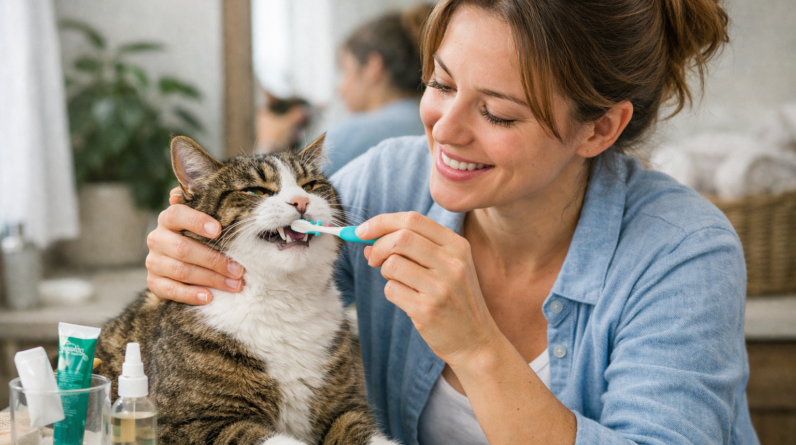
- Gently lift the lip to expose the teeth.
- Hold the brush at a 45-degree angle toward the gumline.
- Focus solely on the outside surfaces of the teeth (the cheek side), using tiny, gentle circles. The tongue keeps the inside surfaces relatively clean.
- Starting small is crucial. Aim for just 5-10 seconds on a few teeth during your first real attempt.
The Non-Negotiable Finish
Immediately after, even if you only brushed two teeth, give your high-value reward and lavish praise. This positive reinforcement is what builds tolerance over time.
Troubleshooting: De-escalating Common Conflicts
What if your cat won’t let me brush teeth without a fight?
-
If they struggle: Stop immediately. Never force it. This reinforces fear. Instead, go back to the previous step (just licking paste) for a few more days.
-
The “Less is More” Approach: If you hit resistance, you moved too fast. Reverting to an earlier, successful step rebuilds confidence.
-
Alternative Options: For the truly resistant, discuss alternatives to brushing cat teeth with your vet. Dental wipes, pads, or prescription dental diets can be supplemental, though they are generally less effective than brushing.
Pro Tips for a Peaceful Process
-
Consistency is Key: Short, daily sessions are far better than long, weekly ordeals. It becomes a normal part of the routine.
-
The Power of Routine: Try to brush at the same time and place each day, like after their evening meal.
-
Read Body Language: Twitching tail, flattened ears, or growling mean “stop now.” Respecting their communication prevents setbacks.
Frequently Asked Questions (FAQs)
How often should I brush my cat’s teeth?
Ideally, cat teeth brushing should be done daily. Plaque hardens into tartar within about 48 hours, so brushing every other day is a good minimum goal.
My cat is older. Is it too late to start?
It’s never too late to improve feline dental health! Start with a veterinary check-up to ensure there’s no painful condition, then begin the slow, patient pre-brush campaign outlined above.
What if my cat’s gums bleed?
Slight bleeding can occur if gums are inflamed due to existing gingivitis. Gentle, consistent brushing will improve inflammation over time. However, persistent or heavy bleeding warrants a vet visit to rule out advanced periodontal disease in cats.
Do I need to brush the inside surfaces of the teeth?
No. Concentrate on the outer surfaces where plaque and tartar accumulate most. Your cat’s tongue provides some cleaning action on the inner surfaces.
Conclusion: A Healthier Smile, A Happier Cat
Mastering how to brush your cat’s teeth is a journey of patience, positivity, and progression. Remember, even a few seconds of brushing is a victory. This isn’t about perfection; it’s about incorporating cat dental care into your life in a way that maintains both your cat’s trust and their health.
The long-term payoff is immense: less pain, fewer expensive vet cleanings, and a stronger bond with your feline friend. The first step towards a successful home routine is a professional assessment. Schedule a veterinary dental check-up to get a clean slate and personalized advice, then embark on your new, peaceful brushing campaign with confidence.