


Those big, pleading eyes watching every bite you take… it’s a scenario every dog owner knows. You want to share a moment of joy with your furry friend, but a nagging worry holds you back: Is this safe? The line between a harmless treat and a toxic hazard isn’t always obvious, and misinformation is everywhere. Knowing what human food can dogs eat is a cornerstone of responsible pet ownership. This guide cuts through the confusion, offering a clear, authoritative list to empower you with knowledge. We’ll cover safe human food for dogs you can share with confidence and the critical foods toxic to dogs you must avoid, helping you prevent emergencies and share snacks safely.
The Golden Rules of Sharing Human Food
Before we get to specific lists, these fundamental principles are non-negotiable for sharing any people food dogs can eat.
Moderation is Everything: Even the safest human foods are treats, not meal replacements. They should make up no more than 10% of your dog’s daily caloric intake to avoid obesity and nutritional imbalance.
Preparation is Key: Safe means plain. Any shared food must be free of added salt, butter, oils, seasonings, garlic, onions, and especially artificial sweeteners like xylitol. Cooking methods matter—boiling, steaming, or baking without additives is best.
Know Your Dog: Consider your individual dog’s health. Dogs with pancreatitis need low-fat diets, diabetic dogs require sugar monitoring, and some dogs have specific food allergies or sensitivities.
When in Doubt, Leave it Out: This is the most important rule. If you are unsure about a food’s safety, the only safe choice is to not share it. Your veterinarian is always the best resource for specific questions.
The Safe List: 5 Human Foods Your Dog Can Enjoy
These human foods for dogs can be healthy, low-risk treats when offered correctly. Always introduce any new food in a tiny amount to check for tummy upset.
Plain, Cooked Chicken or Turkey
A fantastic lean protein source, perfect for a high-value training reward or to top a bland diet for an upset stomach.
-
How to Serve: Must be boneless, skinless, and thoroughly cooked with absolutely no seasonings, especially onion or garlic powder. Shred it for easy eating.
-
Portion: A few small pieces are plenty. It’s a treat, not a meal.
Carrots (Raw or Cooked)
A low-calorie, crunchy vegetable that’s great for dental health and satisfies a dog’s urge to chew.
-
How to Serve: Wash and peel. Serve raw in bite-sized sticks or rounds, or steamed/boiled until soft for older dogs. Always cut to an appropriate size to prevent choking.
-
Portion: A few baby carrots or a 2-inch stick makes a good snack. They are high in fiber, so too much can cause digestive issues.
Plain Pumpkin (Puree, Not Pie Filling)
A digestive superstar. The soluble fiber in pumpkin can help regulate your dog’s system, alleviating both mild diarrhea and constipation.
-
How to Serve: Only 100% pure canned pumpkin, not pumpkin pie mix which contains sugar and spices. A small spoonful mixed into their food is perfect.
-
Portion: 1 teaspoon per 10 lbs of body weight, 1-2 times daily as needed.
Blueberries
These antioxidant-packed little fruits are a true superfood snack, rich in vitamins and phytochemicals.
-
How to Serve: Washed and fresh, or frozen for a cool summer treat. They can be fed whole to most dogs or mashed for tiny breeds.
-
Portion: A small handful (4-8 berries) is an adequate treat. They are also great scattered for a foraging game.
Plain, Unsalted Peanut Butter
A classic favorite, perfect for stuffing into a Kong toy for long-lasting entertainment.
-
How to Serve: This is critical: you must check the label. Ensure it is xylitol-free, as this artificial sweetener is extremely toxic to dogs. Choose natural, unsalted varieties with no added sugar.
-
Portion: Due to high fat and calorie content, use sparingly—a half-teaspoon to a teaspoon is enough for most dogs.
The Danger List: 5 Human Foods That Are Toxic to Dogs
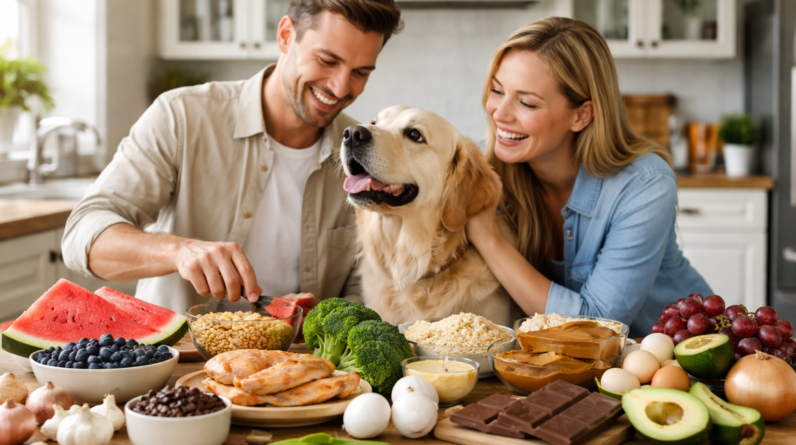
This dog toxic foods list includes some of the most common and severe threats found in homes. Knowing these foods poisonous to dogs can save your pet’s life.
Chocolate (All Kinds)
This is one of the most well-known yet common poisoning cases. Chocolate contains theobromine and caffeine, which dogs cannot metabolize effectively.
-
The Threat: Toxicity depends on the type and amount. Baker’s chocolate and dark chocolate are the most dangerous. Symptoms of poisoning in dogs include vomiting, diarrhea, rapid breathing, hyperactivity, tremors, seizures, and even death.
-
Action: If you suspect ingestion, this is a dog ate chocolate what to do emergency. Contact your vet or poison control immediately with the type and estimated amount consumed.
Grapes and Raisins
The toxic substance in grapes and raisins is unknown, but its effect is catastrophic: it can cause sudden, acute kidney failure.
-
The Threat: There is no safe amount. One grape or raisin can be lethal for some dogs. Symptoms include vomiting, lethargy, loss of appetite, and decreased urination within 12-24 hours.
-
Action: My dog ate grapes is an automatic vet visit. Do not wait for symptoms to appear.
Xylitol (Artificial Sweetener)
Xylitol poisoning in dogs is a rapidly escalating emergency. This sweetener is found in sugar-free gum, candy, baked goods, some peanut butters, and even certain dental products.
-
The Threat: It causes a massive, rapid release of insulin, leading to severe hypoglycemia (low blood sugar) and potential liver failure. Symptoms include vomiting, loss of coordination, collapse, and seizures, often within 30 minutes.
-
Action: This is a true emergency requiring immediate veterinary care.
Onions, Garlic, & Chives (All Alliums)
A common point of confusion: is garlic bad for dogs? Yes, all allium plants (onions, garlic, leeks, chives) are toxic.
-
The Threat: They contain compounds that cause oxidative damage to red blood cells, leading to hemolytic anemia. This includes all forms: raw, cooked, powdered, or in broths and processed foods. Symptoms are often delayed and include weakness, pale gums, rapid breathing, and red-tinged urine.
-
Action: Avoid entirely. Contact your vet if a significant amount is ingested.
Macadamia Nuts
The specific toxin is unknown, but these nuts have a severe effect on dogs’ nervous systems.
-
The Threat: Even a small handful can cause weakness (especially in the hind legs), depression, vomiting, tremors, and hyperthermia. They are often found in cookies, trail mixes, and baked goods.
-
Action: Contact your veterinarian if ingestion occurs.
What to Do If Your Dog Eats Something Toxic
Panic is natural, but a clear-headed response is critical.
- Stay Calm. Your dog needs you to think clearly.
- Remove any remaining food from your dog’s reach to prevent further ingestion.
- Identify what and how much was ingested, and note the approximate time. Keep any packaging.
- Immediately call your primary veterinarian, an emergency animal clinic, or the ASPCA Animal Poison Control Center (APCC: 888-426-4435). Do not induce vomiting unless specifically instructed to do so by a professional.
Creating Healthy Habits: Alternatives to Table Scraps
The best way to avoid accidental poisoning is to build good habits. Designate specific, safe foods (like carrot sticks or green beans) as the “okay to share” treats. When you’re eating, offer your dog a piece of their own kibble or a dedicated dog treat instead of your meal. Reinforce that the human table is off-limits, strengthening their training and keeping them safe.