


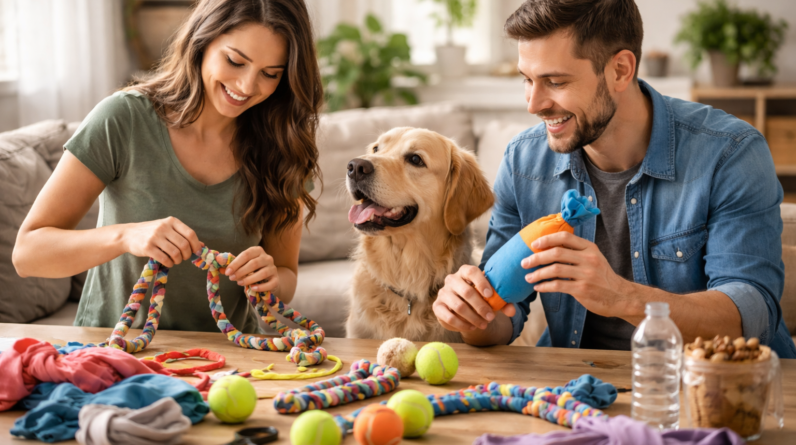
It’s a familiar scene for every dog owner: you buy a new, promising toy, and within minutes, it’s reduced to a pile of fluff and plastic shards. Not only is this frustrating for your wallet, but it also leaves you wondering how to keep your pup engaged. The perfect solution lies in DIY dog toys. Creating homemade dog toys is a creative, budget-friendly activity for you and a source of novel, engaging enrichment for your dog. It’s a fantastic way to repurpose household items, strengthen your bond, and discover the perfect cheap dog toys your pup will actually love. This guide will walk you through making safe, stimulating toys with simple step-by-step instructions.
Safety First: The Non-Negotiable Rules
Before we get to the fun of creating, establishing safety protocols is essential. Your dog’s well-being is the top priority in any dog boredom DIY solution.
Supervision is Mandatory: Treat every homemade toy as a project that requires your watchful eye. No DIY toy is indestructible. Direct supervision is the #1 rule to prevent your dog from swallowing any damaged parts or strings.
Choose Materials Wisely: Stick to safe, durable household items. Great choices include: old cotton t-shirts, towels, fleece fabric, empty plastic bottles (lids and labels removed), and rubber sink mats. Always avoid: string, rubber bands, small beads or buttons, items with toxic glues, coatings, or inks, and anything that can easily splinter.
Know Your Dog’s Play Style: Honestly assess your dog. A gentle player can enjoy more projects than a destructive power chewer. We’ll note which projects are best for different styles, helping you create safe DIY toys for powerful chewers.
Inspect and Retire: Make it a habit to check each homemade toy before and after play. At the first sign of significant wear, tears, or loose parts, retire the toy immediately. It’s better to be safe and make a new one.
Project 1: The No-Sew Braided Tug Toy
This classic is a fantastic first project and a huge hit for interactive play.
Best For: Dogs of all sizes who love a good game of tug.
Materials: 3-4 old cotton t-shirts or pieces of fleece fabric.
Step-by-Step:
- Lay a t-shirt flat and cut straight across, just under the armpits, to remove the sleeves and neck. You’ll be working with the body of the shirt.
- Cut the fabric into 3 long strips, about 2-3 inches wide.
- Knot the three strips together firmly at one end. Braid them tightly down the entire length.
- Secure the other end with another firm knot. For a thicker, more durable braided dog toy, braid three smaller braids, then braid those three together.
Safety Tip: Ensure your braids are very tight and your knots are extremely secure. Discard the toy the moment any strands start to loosen or fray.
Project 2: The Muffin Tin Puzzle Game
This zero-construction project is all about providing mental stimulation for dogs.
Best For: Scent-driven dogs and clever pups who need a brain workout.
Materials: A standard muffin tin, a bunch of tennis balls or similar-sized ball-pit balls, and small, smelly treats.
Step-by-Step:
- With your dog watching, place a few treats in random cups of the muffin tin.
- Place a tennis ball over each cup, covering both the empty ones and the treat-filled ones.
- Give your dog the cue to “find it!” and watch them use their nose and paws to discover the hidden rewards.
Pro Tip: Start with an uncovered tin and just a few treats to teach the concept. Gradually increase the difficulty by covering all the cups, making this a clever dog puzzle toy homemade.
Project 3: The Snuffle Mat (Foraging Fun)
A snuffle mat DIY project taps into your dog’s natural foraging instincts and is excellent for slowing down fast eaters.
Best For: All dogs, especially those who benefit from calm, focused activity.
Materials: A rubber sink mat (the kind with holes) and about 1-2 yards of fleece fabric.
Step-by-Step:
- Cut the fleece into strips approximately 6-8 inches long and 1-2 inches wide.
- Take one strip and thread it through a hole in the mat from the top. Pull it halfway through.
- Tie the two ends of the strip together on top of the mat with a tight double knot.
- Repeat this process, knotting strips through every hole until the mat is dense and shaggy.
- Sprinkle your dog’s entire meal or a handful of treats throughout the mat, pushing some down into the base. Let them snuffle it out!
Maintenance: Shake out debris after each use. For cleaning, most snuffle mats can be hand-washed or placed in a laundry bag on a gentle cycle.
Project 4: The Crunchy Bottle Core
Does your dog go crazy for the sound of a crinkling water bottle? This project harnesses that obsession safely.
Best For: Dogs who are gentle players but love the crinkle sound.
Materials: An empty plastic water bottle (label and cap removed, thoroughly cleaned and dried), an old, long sock or a fabric sleeve.
Step-by-Step:
- Ensure the bottle is completely clean and dry with no small plastic bits inside.
- Insert the bottle into the toe of the sock.
- Tie a very secure knot in the sock fabric just above the bottle’s neck, creating a fabric-covered, crinkly toy.
Crucial Warning: This is a supervision-only toy. The plastic bottle inside can crack. The moment you hear or see the plastic break, immediately and calmly take the toy away to prevent your dog from ingesting any sharp plastic pieces.
Project 5: The “Knot-A-Treat” Dispenser
This project turns a simple towel into an engaging treat dispenser toy DIY that makes your dog work for their snack.
Best For: Moderate chewers who enjoy food puzzles and unraveling things.
Materials: A clean hand towel, face cloth, or dish towel, and a handful of small, dry treats.
Step-by-Step:
- Lay the towel completely flat.
- Sprinkle the treats evenly along the center of the towel.
- Starting from one short end, roll the towel up tightly around the treats.
- Tie the rolled towel into one or several loose knots.
- Hand it to your dog and let them figure out how to unknot and unroll it to get the treats.
Variation: For a bigger challenge, use two or three smaller towels, add treats to each, and knot them all together in a bundle.
Troubleshooting & Pro Tips for Success
My Dog Destroys Toys Instantly: For power chewers, focus only on the Braided Tug Toy (Project 1), making it exceptionally thick and tight from durable fabric like denim (with all hardware removed). Provide constant, direct supervision and avoid bottle or towel projects. You’re creating homemade toys for dogs that destroy everything by focusing on durability.
My Dog Isn’t Interested: Use higher-value treats (like small bits of chicken or cheese) inside puzzles. Lightly scent a fabric toy with a dab of low-sodium broth. Most importantly, play with the toy yourself to spark their curiosity—tug on the braid or pretend the knotted towel is fascinating.
Keeping It Fresh: Dogs love novelty. Implement a toy rotation. Put your DIY dog toys away in a closet after playtime and reintroduce them a few days later. They’ll feel like brand new toys to your pup.
Conclusion: More Play, Less Spend, a Stronger Bond
Making homemade dog toys is more than just a way to save money. It’s a creative outlet for you, a source of unique mental stimulation for your dog, and a wonderful bonding activity you can share. By recycling items you already have, you’re also making a sustainable choice. Start with one easy DIY dog toy for beginners this weekend and enjoy the priceless reward: watching your dog have a blast with something you made just for them.
Call to Action: Which project are you excited to try first? We’d love to see your creations! Share a photo of your DIY dog toy or your pup enjoying it in the comments below. For dogs who need more heavy-duty options, check out our related guide on Best Durable Chew Toys for Power Chewers.
FAQ: Your DIY Dog Toy Questions, Answered
Are old socks safe for dogs to play with?
Yes, a clean sock without holes (that could entrap toes) can be a safe, supervised toy. They are perfect for making the Crunchy Bottle Core (Project 4) or tying a simple knot for a soft fetch toy. Always supervise and discard if damaged.
How do I clean fabric DIY toys?
Most fabric toys can be tossed in a laundry bag or pillowcase (to contain any loose threads) and washed on a gentle, cold cycle. Air dry thoroughly. For the snuffle mat, shaking it out and spot-cleaning is often sufficient.
Can I use plastic yogurt containers or other food tubs?
We generally advise against it. Unlike drink bottles, these containers are often made of thinner, more brittle plastic that can shatter into sharp, hazardous pieces much more easily.
My dog swallowed a piece of fabric—what should I do?
Contact your veterinarian immediately for guidance. Do not wait for symptoms. Inform them of what was ingested, the approximate size, and when it happened. They will advise you on the necessary steps, which may include monitoring or an urgent visit.
Are homemade rope toys (from yarn or string) safe?
We generally advise against using yarn or string. As rope toys fray, dogs can swallow the strings, which can cause serious intestinal blockages (known as a linear foreign body). If you make a rope toy from braided fabric strips, supervise closely and discard the second it begins to fray significantly.